The Series / Booklet Four
Booklet Four
When the Seeker Stops Optimizing
Māyā, Responsibility, Surrender, and the Freedom to Just Be
Beginning from the dangerous compliment that someone can be “good at deep things,” this booklet examines opportunity, priority, optimization, and the spiritual trap of usefulness. It asks whether responsibility is always dharma, or whether it can become ego in clean clothes, and whether surrender is medicine for the restless instrument rather than a service rendered to Bhagavān.
Booklet Four
Opens as a book: turn the pages, set the type and paper, and pick up where you stopped.
When the Seeker Stops Optimizing
Sasidhar Valluru
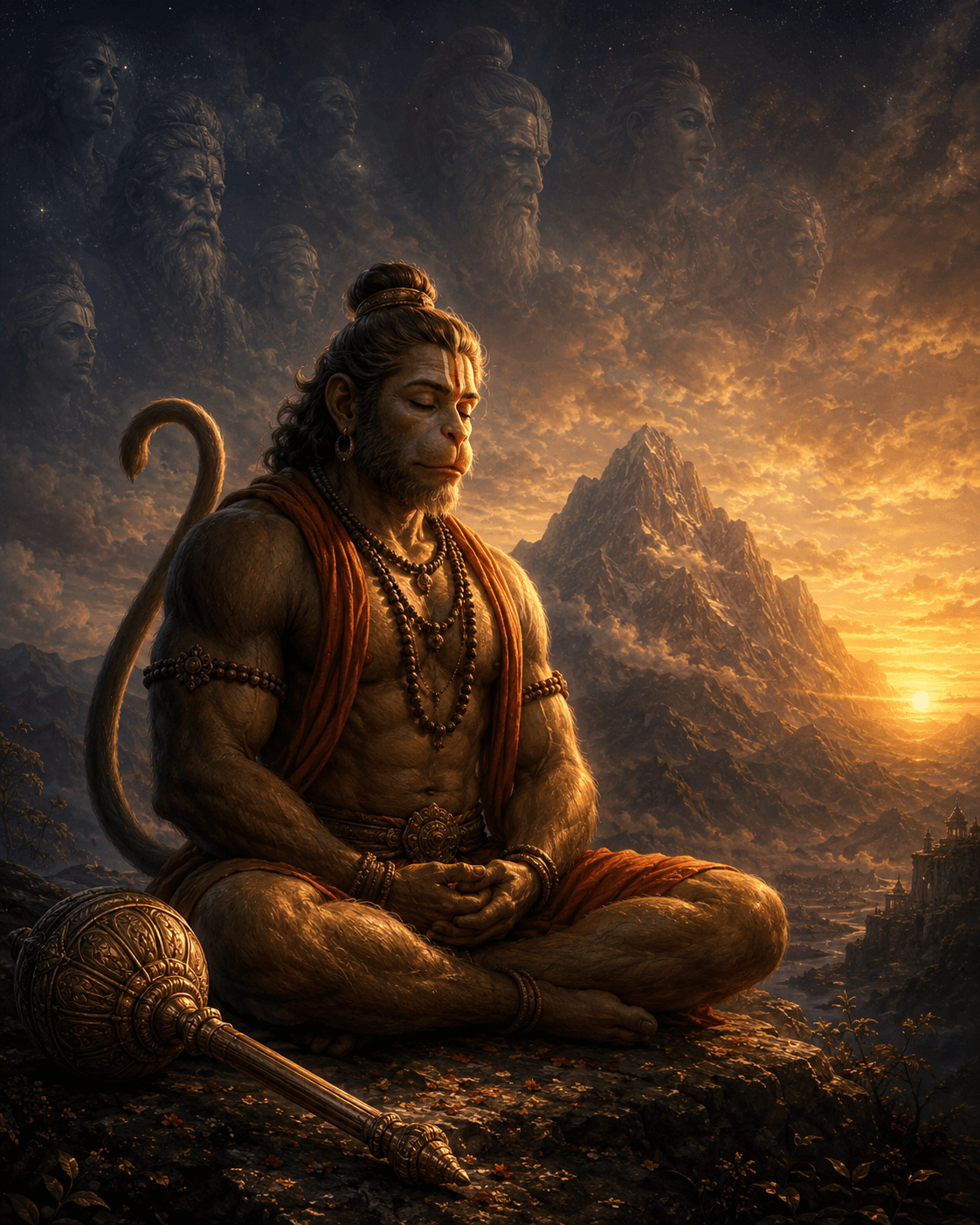
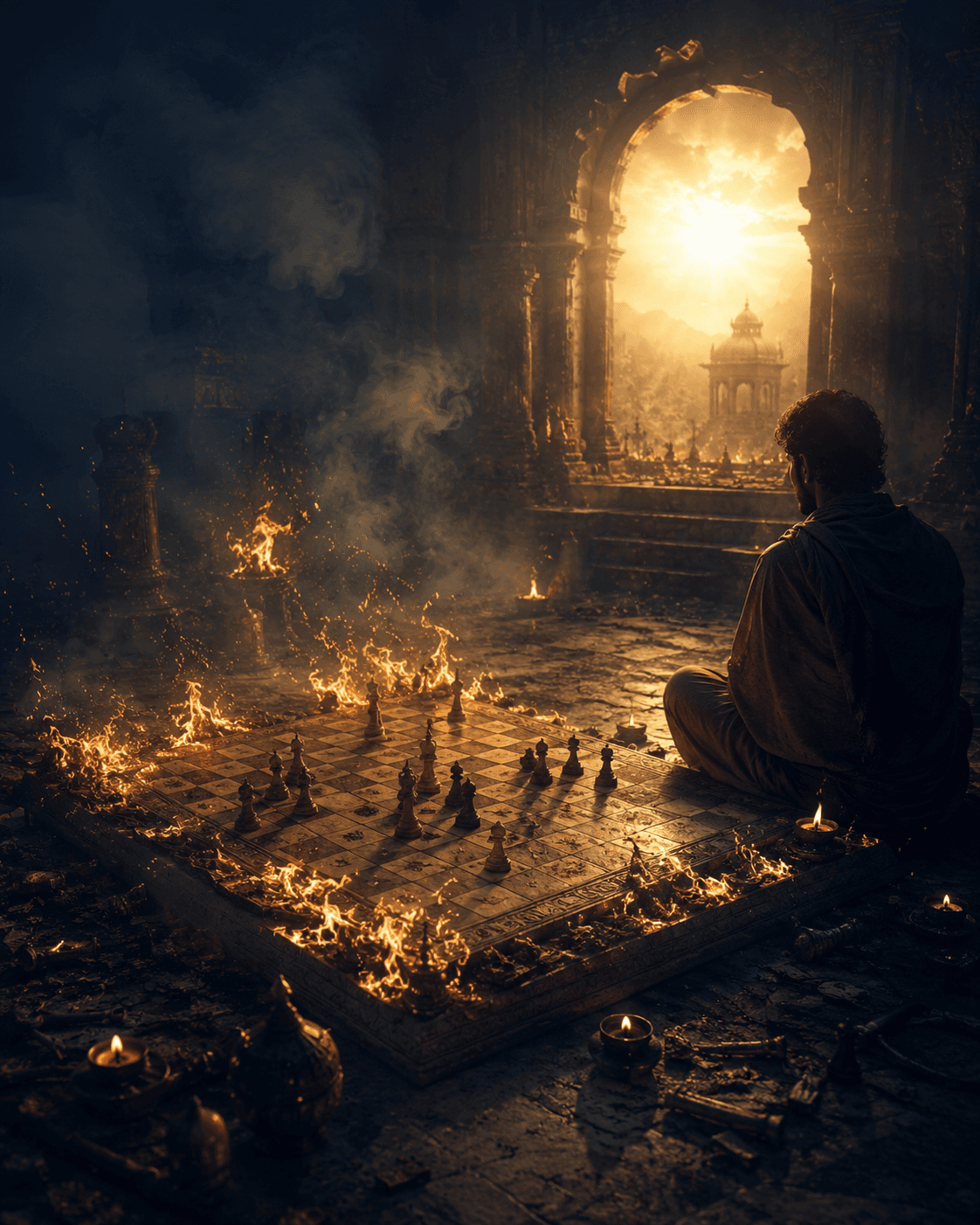
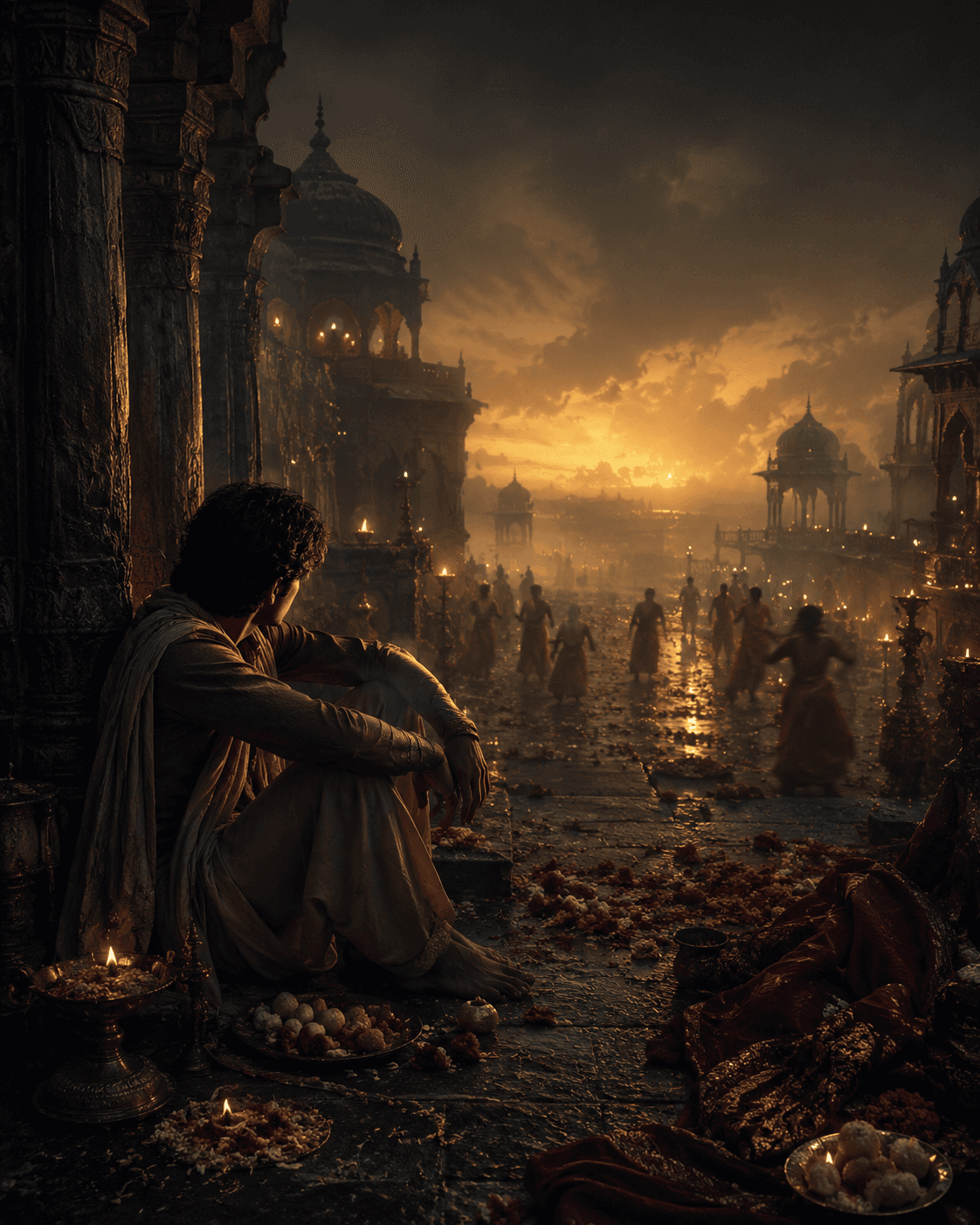
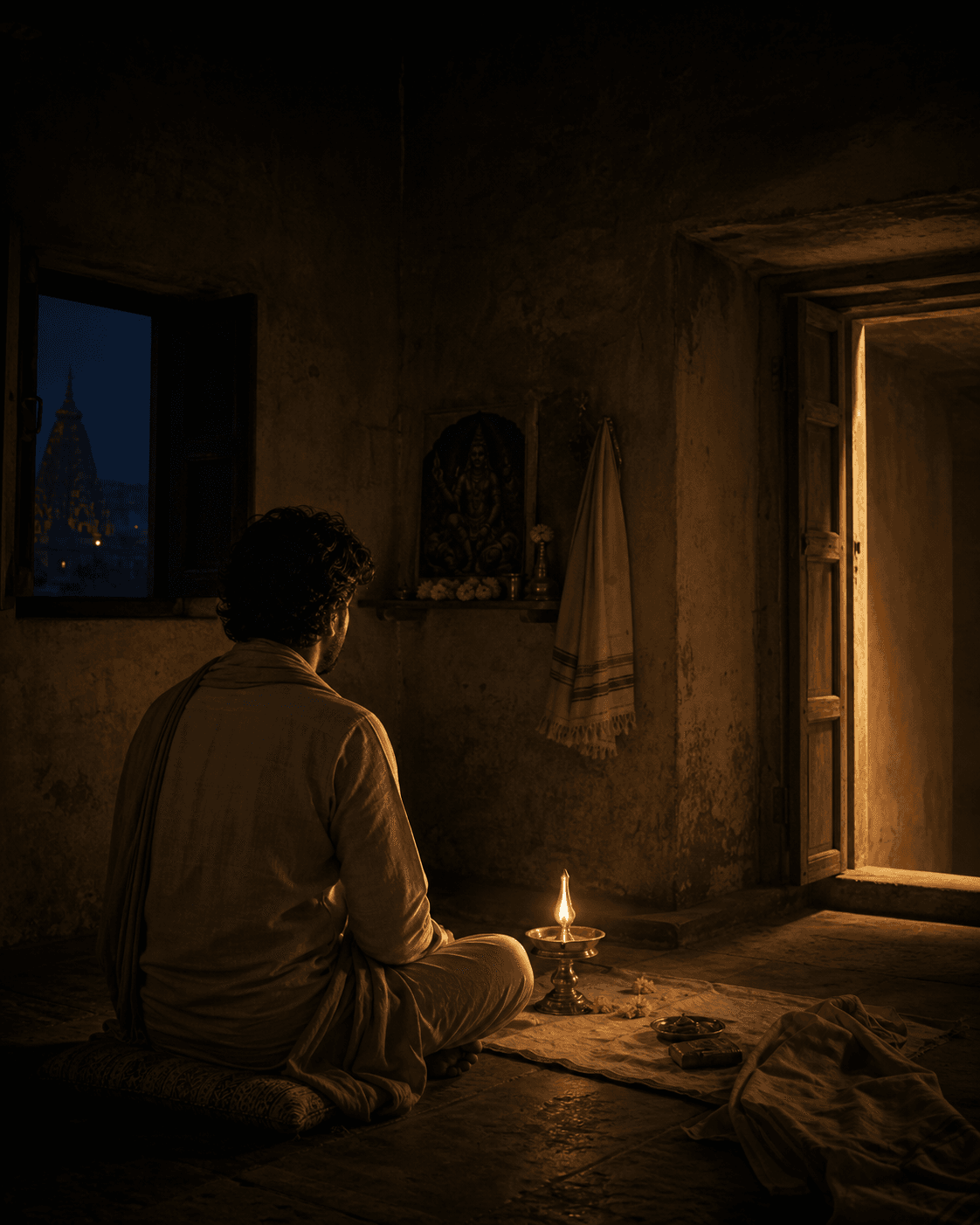
Cover image: AI-generated concept artwork based on the Booklet Four theme - māyā as mist, veil, threshold, starlight, and the hazy light beyond.
Author’s Note
This booklet began with a compliment. A slightly dangerous compliment. Some people saw the earlier booklets and said, “I did not know you could write on these subjects,” or “I did not know you could write such deep stuff.” That interested me. Not because I wanted applause. Applause is sweet for a minute and useless after that. What interested me was the assumption hiding behind the compliment. These were people who had known me for years. They had seen me work. They had seen me in artificial intelligence architecture, leadership, delivery, documentation, business analysis, project management, mentoring, and the usual professional circus where one is allowed to be considered useful. So I asked them a simple question. What do you think I am actually good at? The answers varied. AI architecture. Leadership. Grasping power. Wide range of subjects. Ability to inspire and mentor. Documentation. Business analysis. Project management. Delivery excellence. Yada yada. Then I asked the next question. If you think I can go deep in those areas, why assume I cannot go deep here? Why is philosophy, spirituality, theology, or whatever polite bucket people want to use, treated as a different species of intelligence? The answers became more interesting. People said, “Everyone is good at some things and not good at others.” Some spoke of different kinds of intelligence. Someone good at art may not be good at math. Someone good at logic may not be good at music. Fair enough. Nothing wrong with that. But when I pressed further, another word appeared. Opportunity. People had not necessarily failed at many things. They had not necessarily lacked the capacity. They had not even tried long enough to know. They were afraid the boss would judge them. They were busy earning a living. They worried about the cost of a hobby. They had no audience. No setting. No permission. No mental space. No occasion. Not to trivialize any of that. Life is not a motivational poster pasted over a leaking wall. But if we strip the answer further, opportunity often becomes priority. And priority, when stripped still further, becomes optimization. That is where māyā smiles. This booklet is about that smile. It asks what happens when the seeker stops treating life as an optimization problem. It asks whether responsibility is always dharma, or whether it can become ego wearing a clean shirt. It asks why Vyāsa could accomplish so much and still remain dissatisfied. It asks why Nārada, the cheerful troublemaker, keeps chanting and remains free. It asks why Śrī Rāma in the forest, Samvartaka before power, Arjuna in Pātāla, and the child in a railway journey all point toward the same inward correction. Just be. Not do nothing. Not escape. Not become useless. Just stop pretending that the whole bloody universe is waiting for your optimization model.
Opening: The Question Behind the Compliment
1. Opportunity Is Priority Wearing Respectable Clothes 2. Māyā as the Optimization Problem 3. The Train to Delhi 4. Just Be Is Not Laziness 5. Śrī Rāma in the Forest: Duty Without Optimization 6. Samvartaka and Arjuna: When Nothing Is Left to Optimize 7. Responsibility: The Last Sophisticated Trap 8. Vyāsa’s Disillusionment: When Accomplishment Does Not Settle the
Heart
9. Nārada: The Happy Troublemaker Who Knows the Secret 10. The Flag, the Chariot, and the One Who Just Is 11. Surrender Is Not a Service We Render to Bhagavān 12. The Gist
Epilogue: The Witnesses Who Remain
Opening
The Question Behind the Compliment
The first booklet asked how the seeker stands when dharma is tested, when māyā is named, when power is humbled, when knowledge is warned, when surrender becomes the final shelter, and when even the familiar gods seem silent. The second asked how silence becomes sound. Not sound as noise. Not sound as entertainment. Sound as Om, nāda, rhythm, language, art, grief, offering, and the strange background current that keeps playing even when the world breaks. The third turns toward language. The mother tongue. Chandas. Yati. Prāsa. Alaṅkāra. Story. Metaphor. The tongue as instrument. The question there is whether language remains merely clever, defensive, social, and worldly - or whether it learns to bow. This fourth booklet begins from a more ordinary doorway. A compliment. A slightly surprised compliment. People saw the earlier booklets and said they did not know I could write this kind of deep material. The sentence was harmless. Even affectionate. But I heard the small assumption sitting behind it. They were not surprised that I could think. They were surprised that I could think here. That difference matters. Because many human beings do this to themselves and to one another. They box capacity into approved domains. This person is technical. That person is artistic. This one is spiritual. That one is practical. This one is intellectual. That one is emotional. This one is a leader. That one is a poet. As though Bhagavān issued people like department-wise purchase orders. So I asked them what they thought I was good at. The answers came easily enough. AI architecture. Leadership. Grasping power. Wide range of subjects. Ability to inspire and mentor. Documentation. Business analysis. Project management. Delivery excellence. Then I asked: if you think I can go deep there, why assume I cannot go deep here? The answers became slower. Some said people are naturally good at certain things and not others. Some spoke about different intelligences. Some said artistic ability, mathematical ability, leadership ability, emotional intelligence, and spiritual depth are not the same. True enough. But that was not the end of it. I pressed further. Why are people good at some things and not others? Is it because they tried and failed? Is it because they never tried? Is it because they tried once, felt foolish, and quit? Is it because no one gave them an opening? Is it because they had no money, no time, no space, no teacher, no audience, no permission, no mental state, no occasion? The answer that came again and again was opportunity. Opportunity in the broadest sense of the word. Then I asked the next question. Was it really absence of opportunity? Or was it priority? You were afraid the boss would judge you. You were busy earning your livelihood. You were worried about the cost of that hobby. You wanted to maximize your job prospects, financial prospects, social position, family comfort, stability, or reputation. Again, not to trivialize any of that. These are real pressures. Real people live under real constraints. Empty advice from people with full stomachs is one of the more irritating forms of air pollution. Still, the structure underneath was clear. People were optimizing. They were solving for something. Money. Safety. Recognition. Approval. Stability. Social permission. Professional growth. Family approval. Avoidance of embarrassment. Avoidance of failure. Avoidance of wasted time. When human beings are torn between priorities, they choose. They must choose. And because they choose, they begin to think they are solving an optimization problem. That is where the spiritual question begins. What exactly are we optimizing? And who is the optimizer?
Chapter 1
Opportunity Is Priority Wearing Respectable Clothes
Opportunity is a respectable word. It sounds sober. It sounds fair. It sounds like life itself. One person had opportunity. Another did not. One person had the right environment. Another had duties. One person had encouragement. Another had mockery. One person had money. Another had rent. One person had teachers. Another had a boss breathing down his neck like a corporate piśācha with calendar invites. All true. But opportunity does not explain everything. Many times, opportunity is priority wearing respectable clothes. A person says, “I never had the opportunity to paint.” But maybe the deeper truth is: painting did not outrank income, respectability, exams, marriage, children, EMI, immigration, promotion, or fear of being judged. A person says, “I never had the opportunity to write.” Maybe. Or maybe writing did not outrank the fear of being seen before the sentence became perfect. A person says, “I never had the opportunity to study scripture.” Maybe. Or maybe scrolling, arguing, earning, performing intelligence, and winning trivial battles gave faster dopamine returns. Again, this is not accusation. I am not sitting as judge. I am as implicated as anyone else. The only difference is that at some point the seeker in me became more curious than the ego in me was defensive. When someone says, “I could not,” I now ask quietly: could not, or did not optimize for it? That question can sound cruel if spoken without compassion. But it can become liberating if examined honestly. Because once we see priority, we see choice. Once we see choice, we see attachment. Once we see attachment, we see māyā. Māyā is not only some grand cosmic illusion where the universe is mistaken for final reality. Māyā also appears in very practical clothing. Career planning. Family prestige. Social role. Professional identity. Fear of falling behind. Fear of looking foolish. Fear of being irrelevant. Fear of losing the race. Fear that if one does not optimize every damn variable, life will collapse like a badly maintained municipal bridge. So we optimize. We optimize income. We optimize reputation. We optimize health. We optimize networking. We optimize children. We optimize education. We optimize spirituality. We optimize even rest. There are people who optimize sleep so aggressively that sleep must be hiding under the bed, terrified. And then we wonder why there is no peace. The first movement of this booklet is simple. Human beings are not merely deprived of opportunity. They are often trapped by optimization. They are trying to maximize something within a field whose ending has already been declared. That ending is death. Which means the next question cannot be avoided.
When death is certain, what exactly are we optimizing? 2. Māyā as the Optimization Problem
Here is the trick. This is the damn illusion. We want to optimize something which cannot be optimized. It does not need to be optimized. And any attempt, however sugar-coated, is simultaneously futile and foolish. That sounds harsh. Good. It should. The mind does not loosen because we politely request it. The mind is a stubborn landlord. Sometimes you have to bang the door. For me, one of the earliest blows came through the Yaksha Prashna episode in the Mahabharata. I first read it in C. Rajagopalachari’s English retelling when I was in sixth grade. I am not going to be anal about exact wording, philological precision, or whether the Yaksha literally asked the question in the exact form in which later retellings preserve it. That was supposed to be a private conversation between Yudhiṣṭhira and the Yaksha. Even divine seers can be misquoted by publishing departments several yugas later. Let us not act like the minutes were circulated in PDF. The point is the answer. The question was something like: what is the most surprising thing? Yudhiṣṭhira’s answer was essentially this: every human being sees others die, knows death is certain, and yet lives as though he himself will continue indefinitely. I had my holy moly moment right there, on that page. Because if death is the absolute truth, what are people optimizing? This is not a gloomy thought. It is not pessimism. It is not denial of life. It is a cleansing thought. If the ending is fixed, the wise question is not how to own the journey. The wise question is how to travel. Māyā survives because the mind behaves as though the journey can be converted into possession. The mind says: I will control this. I will secure that. I will maximize these variables. I will become so competent that uncertainty will surrender. I will become so rich that fear will disappear. I will become so respected that death will hesitate outside my gate and ask for appointment. Nonsense. Death does not care about your calendar. The seeker need not become morbid. The seeker simply stops lying. The body will go. Roles will go. People will remember, misremember, exaggerate, forget, quote, misquote, and move on. The world will not pause. The market will open. Someone will complain about traffic. Someone will order tea. Someone will ask for a status update. Someone will say “deeply saddened” and then look for parking. So what is the optimization problem? The answer is brutal.
There is none.
There is action. There is dharma. There is love. There is duty. There is beauty. There is grief. There is work. There is art. There is laughter. There is responsibility. There is offering. There is surrender. But there is no final worldly optimization problem worth treating as ultimate. The whole bloody optimization problem is junked. Not because life is meaningless. Because life is not ours to own.
Chapter 3
The Train to Delhi
Now take a train. Hyderabad to Delhi. Or point A to point B. The exact stations do not matter. You know the journey ends at Delhi. You know you cannot get down before the real destination in any final sense. Nobody ever did. You know the train will not stop forever because you have a preference. You know the journey has a direction you did not invent. And yet, here you are. Planning to buy pakodas at the next station. Arguing with the ticket collector. Getting irritated with the man on the next seat. Wondering which vendor will arrive. Hoping the train is not too late. Complaining about the berth. Checking whether the window seat is better. Acting as though the railway system was built for your strategic roadmap. As kids, we did something else. We looked out of the window. We watched the scenery. Fields. Trees. Stations. People. Cows. Vendors. Dust. Light. The whole bloody country moving past like cinema without needing a ticket. If the pakoda guy came around and my father bought pakodas, I ate. If he did not, I kept looking outside. Sometimes my mother would pull something out of her purse. Indian mothers can pull even rabbits out of their purses. I swear. A drink. A Poppins. Some snack wrapped in a piece of paper. Some emergency thing no one else knew existed. The mother’s purse is one of the fourteen lokas. I am convinced. If Dad gave pakoda, you ate. If it was too spicy, Mom gave a drink or something sweet. If nothing came, you looked out of the window. If tired, you slept. When the destination came, your parents woke you up a few minutes early. You did not even have to lug the bags down. You held their hand and walked out. That is exactly how I have lived my life. At least, that is how I understand my life now. Sometimes Dad would get down at a station to buy something. Then the train would move and he would be nowhere to be seen. In the first couple of journeys, I panicked. Mom would calmly say he was just showing off. He liked to get onto a running train in a different compartment and then walk back. And yes, eventually he would appear, walking back to our seats as though the universe had merely taken a small tea break. By the third time, my fear had changed. I started egging him to get down and buy goodies. The fear of losing him became confidence in what he could do. And if he did not buy anything, fine. Back to window watching. That is exactly how I treated Bhagavān and Mata. All my life. Even today. I live in the present. I enjoy the present. Not because the present is always beautiful. Not because suffering is cute. Not because the window always shows flowers and sunlight. Sometimes the window shows garbage, heat, dust, and stations where the tea tastes like philosophical punishment. Still, I enjoy the present because I am with Them. That child could have chosen to sulk and sleep. But why? For three or four days, he had his mother and father full-time. They talked. Laughed. Played games. Shared food. Watched the country move. The journey itself became the most fascinating and memorable part of the vacation. Is life not the same? You cannot predict which seller will come at which station. You cannot know exactly how late or early the station will arrive. You cannot go back to stations gone past and renegotiate. You cannot force the vendor to carry the snack you imagined. You cannot control whether Dad gets down or stays seated. You cannot convert the journey into ownership. You just live. You just be. In Their presence. This is not passivity. This is intimacy. This is not fatalism. This is trust. This is not “I will do nothing.” This is “I will stop pretending I own the journey.” That shift is māyā-dissolution in daily language.
The free reading ends here
9 more chapters to read
One email. The rest opens here, and you'll hear when the next booklet is ready.