The Series / Booklet Six
Booklet Six
When Grief Became Nāda
Padyam, Surrender, and the Realization That Nothing Is Owned
This booklet begins from the unbearable recognition that nothing is truly owned—not body, work, skill, language, children, grief, or even the ātma if “mine” still clings to it. The movement is not from sorrow to explanation, but from grief to surrender, from surrender to nāda, and from nāda to offering.

Booklet Six
Opens as a book: turn the pages, set the type and paper, and pick up where you stopped.
When Grief Became Nāda
A reading through Telugu verse, grief, Śiva, Kāli, Kṛṣṇa, surrender, and nāda arpaṇam
Sasidhar ValluruT H E I N WA R D F I R E S E R I E SBooklet Six
WHEN GRIEF BECAME NĀDA Padyam, Surrender, and the Realization That Nothing Is Owned
A reading through Telugu verse, grief, Śiva, Kāli, Kṛṣṇa, surrender, and nāda arpaṇam
Sasidhar Valluru
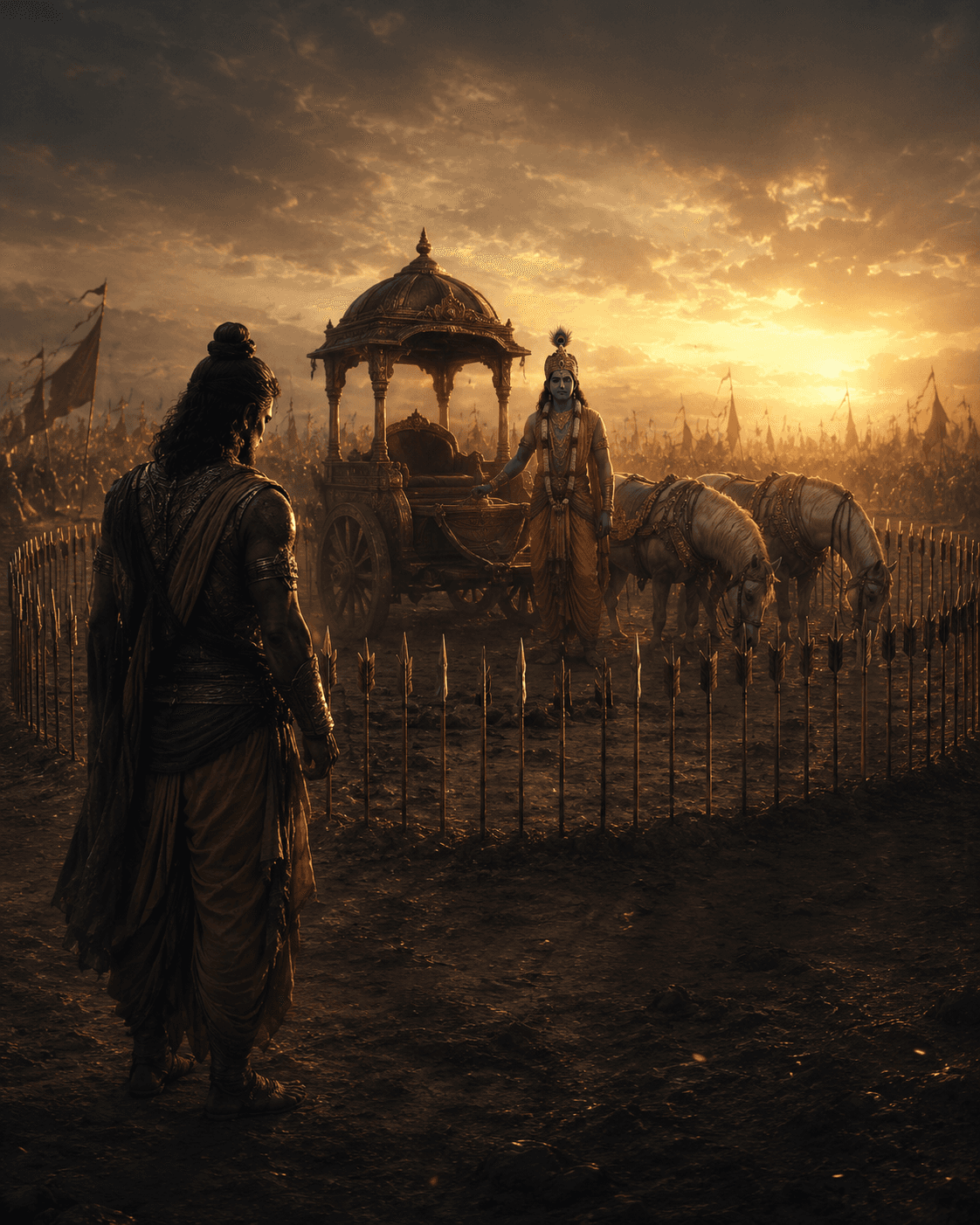
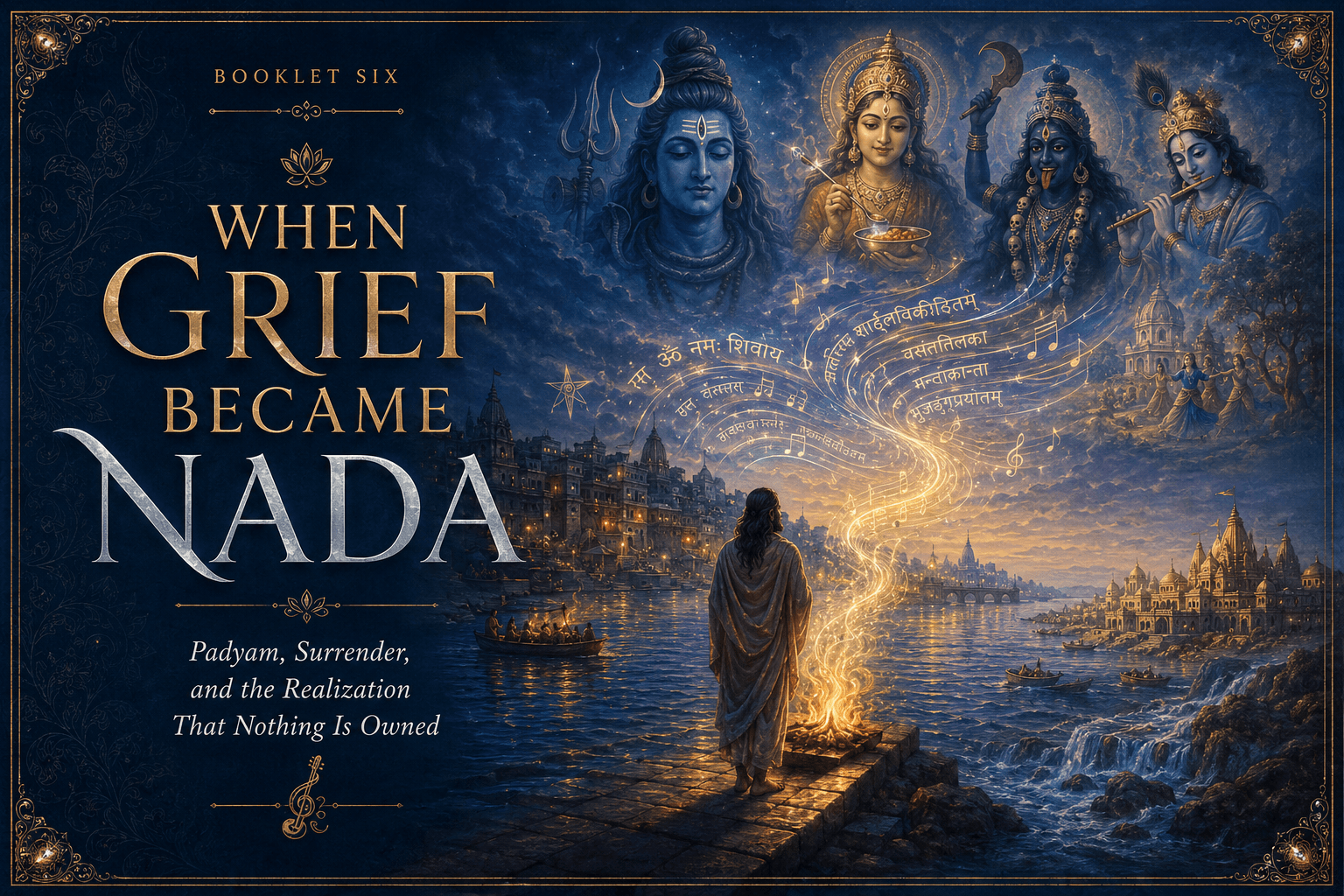
Cover artwork: Original AI-generated devotional artwork based on the Booklet Six theme - grief becoming nāda, the seeker at the river, and the divine presences of Śiva, Amma, and Kṛṣṇa. Interior artwork: Original AI-generated devotional artwork based on the inward image of resting at Śiva’s feet, holding His great toe in total surrender.
Author’s Note
This booklet is the sixth inThe Inward Fire Series.
The earlier booklets moved through dharma, silence, nāda, language, surrender, optimization, witnesshood, and the long work of Bhagavān. This booklet turns toward something more intimate.
Grief.
Not grief as biography. Not grief as spectacle. Not grief as a claim on sympathy.
Grief as fire. Grief as teacher. Grief as the breaking of ownership.
The verses in this booklet were born from a simple but unbearable recognition: nothing is truly owned. Not the body. Not language. Not work. Not skill. Not children. Not grief. Not even the ātma, if the word “mine” still clings to it.
The movement here is not from sorrow to explanation. I do not believe Bhagavān’s līlā can be explained by the clever mind. Trying to understand it fully may itself be another form of māyā.
The movement is from grief to surrender. From surrender to nāda. From nāda to offering.
The Telugu verses are presented with meter, bhāva, meaning, and an author’s note. The author’s note is not meant to explain the poem away. It is meant to show the inner weather behind each verse: the thought, the wound, the turn, the recognition, and sometimes the collapse of all explanation.
I have attempted chandas, yati, and prāsa. Where I have stumbled, I ask Amma to correct me.
The final offering is not literary mastery. It is nāda arpaṇam.
May grief return to the One who owns it. May language bow. May the soul learn how to speak to His infiniteness.
Contents
1.1. The First Cry14.12C. Dwaraka Shores and the Ganga Ashes కందము- accusation at Bhagavān’s feet without loss of surrender.మత్తేభవిక్రీడితము- Kṛṣṇa sharing His own paternal grief.
2.2. Silence After the Storm15.12D. Barsana After Death మత్తేభవిక్రీడితము- presence mistaken for happiness; grief teaching silence.మత్తేభవిక్రీడితము- Radha revealed as the strength that survives separation.
3.3. Kāla Redirected16.12E. Kṛṣṇa Still Silent మత్తేభవిక్రీడితము- parental tenderness turning into surrender.మత్తేభవిక్రీడితము- the devotee consoling the mute Bhagavān.
4.4. Annapūrṇa Intimacy17.13. The Child Who Held the Liṅga కందము- the body denied annam; the soul asking to be fed.కందము- childhood trust returning as accusation.
5.5. Śrāddha, Daśa-Dānālu, and Ownership Dissolved18.14. Kālantaka Question ఆటవెలది- funerary ritual overturned by surrender.మత్తేభవిక్రీడితము- the Mārkaṇḍeya memory turned into personal wound.
6.6. Speaking to the Mothers19.15. The Wronged Father and the Mother కందము- smile-through-tears intimacy with Amma.ఆటవెలది- grief prevented from becoming revenge.
7.7. Skill, Helplessness, and the Pañcabhūta Millstone20.16. Who Do I Complain To? ఆటవెలది- the collapse of professional and paternal ownership.కందము- complaint collapsing because Mother is grieving too.
8.8. Liṅga and Body21.17. Was I the Target? ఆటవెలది- body and liṅga seen as pañcabhūta forms.మత్తేభవిక్రీడితము- suspicion that grace redirected destruction.
9.9. Kāli After the Fire22.18. I Will Never Understand Your Līlā మత్తేభవిక్రీడితము- post-fire recognition of Dakṣiṇa Kāli.ఆటవెలది- surrender without explanation.
10.10. Kāmadahana Re-read Through Grief23.19. I Never Held You మత్తేభవిక్రీడితము- moha becoming the true Manmatha burned by Śiva.మత్తేభవిక్రీడితము- the child never held Śiva; Śiva held the child.
11.11. Nīlakaṇṭha and Remaining Debt24.20. I See Your Grief Now మత్తేభవిక్రీడితము- poison held in the heart because speech remains.మత్తేభవిక్రీడితము- recognizing that Bhagavān too has endured unbearable loss. 12.12A. Brindavan and the Failure of Optimization మత్తేభవిక్రీడితము- human scheduling colliding with līlā.25.21. I Did Not Curse You ఆటవెలది- dharma held without bitterness. 13.12B. Did You Want Him for Yourself? మత్తేభవిక్రీడితము- intimate accusation already inside surrender.26.22. Kāśī Gurus and Śānta-Tarka మత్తేభవిక్రీడితము- calm reasoning after devastation. 27.23. What Shall We Say Now?30.26. Lead Me Through Ananta Kāla ఆటవెలది- words exhausted; mutual presence remains.మత్తేభవిక్రీడితము- Mother feeding the soul beyond all mothers.
28.24. Just Be in Each Other’s Presence31.27. Nāda Arpaṇam మత్తేభవిక్రీడితము- bhakti beyond transaction and answers.మత్తేభవిక్రీడితము- the final offering of sound.
29.25. Back to Business ఆటవెలది- returning to work after surrender.
Epilogue: When Grief Returns to Silence
Opening
Grief Is Not Owned
This booklet begins where argument fails.
Grief enters first as possession.My loss. My wound. My child. My failure. My unanswered question.
But the inward fire does not allow ownership to remain untouched. It burns through the claim itself. It asks a harder question: who owns grief?
If nothing is truly mine - not body, not work, not skill, not language, not memory, not even the ātma when “mine” still clings to it - then grief too cannot be mine in the final sense.
This does not make grief smaller.
It makes it sacred.
The verses that follow are not explanations of loss. They are attempts to place grief back where it belongs: at the feet of Bhagavān.
I do not want this booklet to become a grief memoir. The point is the realization that grief itself is not owned. It passes through the person, burns the false center, and asks whether surrender is real or merely decorative.
Some verses question Bhagavān. Some tease Him. Some accuse Him. Some collapse at Amma’s feet. But none of them leave bhakti.
The movement is not from pain to answer. It is from pain to surrender; from surrender to nāda; from nāda to offering.
Chapter 1
The First Cry
Author’s Note Meter:కందము This is the first cry. It is not polished prayer. It is a child speaking to his Father after the floor has disappeared. Bhāva:accusation at Bhagavān’s feet without loss of surrender. The important thing for me is that accusation and surrender remain together. I question Him, but I still say
నిĶన్నే కోరితి తండ్రీ
తండ్రీ. That word keeps the verse inside bhakti. The māyā cauldron is not abstract philosophy here. It is fatherhood,
నæన్నేయ మా యగుండ మటు్టున లా గన్ ।pride, identity, capability, continuity, and the illusion thatకžన్నేందు గర్వముతోడుకొ
anything is truly mine. Kanda works because the feeling is short, sharp, and broken. There is no room yet for long
న్నేవు మొ దటి పుతు్రుఁ — కో లునె యె టు్లు ॥
reflection.
Meaning Father, it was You alone I wanted. You dragged me out of this cauldron of māyā. Along with the pride in my eyes, You took my first-born too. How am I supposed to stand now?
Chapter 2
Silence After the Storm
Author’s Note Meter:మత్తేభవిక్రీడితము This verse begins after the first shock. The mind is still asking, but it has stopped assuming that divine presence Bhāva:presence mistaken for happiness; grief teaching silence. means emotional comfort. I had mistaken nearness to Bhagavān for happiness. This verse corrects that. His
దిక్పాలాదులు లచకక్రీముతో దేరిర్చి నిలిచి న వే ళలో
presence is not a guarantee that life will remain gentle. It may become the force that removes every false support.
దుఃఖాంభోధిని ననున్నే ముంచితివి దో షంబుగాననక్పాకన్ ।Chidānanda is not excitement, relief, or circumstance-“సాక్షాత్ సనిన్నేధియే సుఖం” యని Ķన్సంశాంతిమై
based peace. It is the silence that remains when the mind has nothing left to optimize, defend, or explain.
భ్రమించితిన్ని శ్శబ్దంబే చిదా నందమని Ķడు నె మ్మదిగా Ķరిర్చితిన్ ॥
Meaning When even the guardians of the directions stood aligned with Time’s wheel, You plunged me into an ocean of grief - not out of cruelty. I had mistaken Your presence for happiness and peace. Now I slowly learn that Chidānanda is absolute silence.
Chapter 3
Kāla Redirected
Author’s Note Meter:మత్తేభవిక్రీడితము Here the accusation begins to turn. The first instinct is pain. The next is the unbearable reversal: perhaps even Bhāva:parental tenderness turning into surrender. this was protection of the child from a grief he could not
బాలుఁ డి ంత నిరా పరాధి — ననుబోయి
have carried. That does not make the loss smaller. It makes surrender more severe. The verse does not say, I
నన్ భగన్నేమైపోయెడిన్వేunderstand. It says: feed my soul, because thought is
లంబించక లమార్గమును వైపు తి్రు Ãక్పాతివే ।exhausted. Amma enters here not as doctrine but as
nourishment. The soul asks to be fed where mind andఅమా్మ! ఆత్మకు అనన్నేమై ని లువుమీ — ఆలోచనక్షీణమైbody can no longer carry the weight.æ మంబు మిగిలే ని శర్చిలతలో ననున్నేంచు దయామయీ ॥
Meaning He was so innocent - had I gone instead, he would have shattered completely. Without delay, You turned the path of Time toward me instead. Mother, become food for my soul now, when thought itself is exhausted. Leave me in that stillness where only Your name remains.
The free reading ends here
23 more chapters to read
One email. The rest opens here, and you'll hear when the next booklet is ready.