

The Series / Booklet Seven
Booklet Seven
Beyond Grief
The vow, the chariot, and movement before sunset.
Standing near the battlefield of grief, this booklet moves through Arjuna, Krishna, Śiva, Kali, Hanuman, Narasimha, the bow, the arrow-fence, and the vow. It does not glorify anger; it asks that force remain under sanction, that grief move away from the center, and that the seeker be used correctly when Bhagavān’s work remains.
Booklet Seven
Opens as a book: turn the pages, set the type and paper, and pick up where you stopped.
Beyond Grief
A reading through grief, vow, Mādhava, Arjuna, Siva, Mother, and the work that remains
Sasidhar ValluruT H E I N WA R D F I R E S E R I E S Booklet SevenBEYOND GRIEF Warrior's Vigil Amidst the Battle's Glow
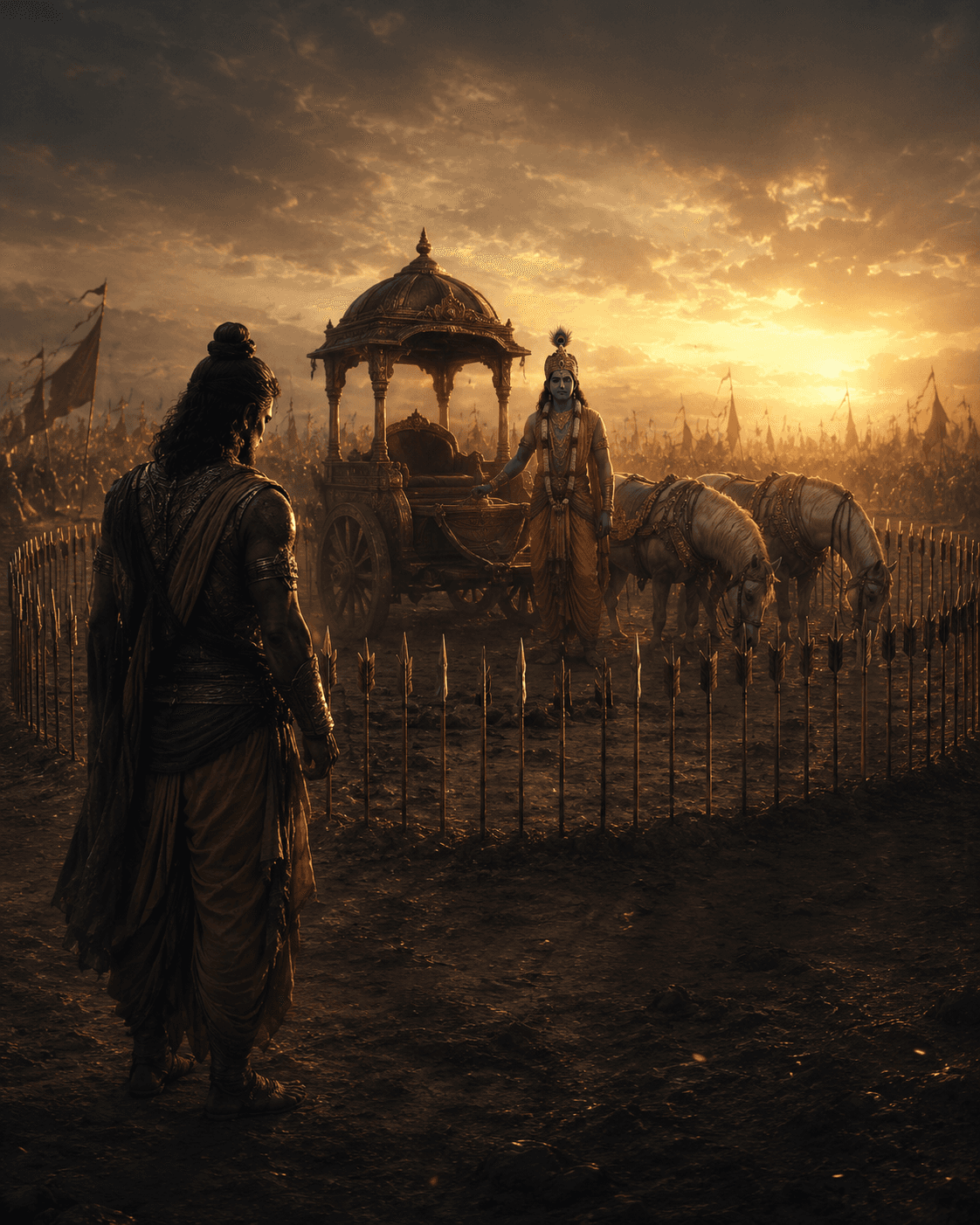
A reading through grief, vow, Mādhava, Arjuna, Siva, Mother, and the work that remains Cover image: AI-generated concept artwork based on the Booklet Seven theme - the warrior outside the circular arrowfence, Mādhava within with the horses, protected grief becoming vow.
Sasidhar Valluru
Author’s Note
This seventh booklet in The Inward Fire Series is not a treatise on grief. It is what remains after grief has stopped being the central identity of the seeker. The earlier booklets moved through dharma, maya, sound, language, surrender, and witness. This booklet stands at a harder threshold. The seeker has wept, argued, surrendered, and been tempered. He no longer asks why the wound came. He asks what work remains. The language here is intentionally closer to utterance than essay. These are poetic inserts: part prayer, part battlefield remembrance, part intimate complaint, part vow. They move between Arjuna and Krishna, Rama and Sita, Siva and Kali, Hanuman and Narasimha, but themovementisnotmuseum-mythology.Eachimageisturned inward. The arrow-fence becomes a shelter for exhausted senses. The horses become the indriyas. Sunset becomes death. The bow becomes the prepared instrument. Krishna's silence becomes a death-bell. Siva's bluethroatbecomesrestrainedpoison.TheMother'spermission becomes the boundary between dharmic force and egoic violence. The booklet does not end by glorifying anger. It cools into vairagya. Jewels, crowns, royal heads, and even battle identities are left behind when the living one moves on. What remains is Bhagavan's work, the vow, and the request: when the vow is complete, take me home.
Opening
WHEN GRIEF STOPS BEING IDENTITY
Grieffirstarrivesasinvasion.Ittakesthebody,rearrangesthe breath, ruins sleep, and makes ordinary speech feel foolish. In that first season, every philosophy sounds either too small or too polished. The seeker does not need a slogan. He needs presence. But grief, if carried to Bhagavan and not merely to memory, begins to change shape. It stops being only wound. It becomes fire. Then it becomes pressure. Then it becomes instrument-making. The bow bends. The body survives heat. The heart learns resonance. The senses, like exhausted horses, must be taken inside a protected wall before they can return to the field. That is the inner image of this booklet. Outside the arrow-fence, the battle continues. Inside it, Madhava tends the horses. The seeker suspects that the wall was not built for the horses alone. It was also a chamberwhere KrishnacouldhideHisowngrief.Thisisnot sentimental theology. It is intimacy. The devotee finally understands that the Lord does not merely observe suffering from a safe distance. He bears, redirects, and waits until the instrument can stand again. From that point onward, the voice changes. The seeker no longer begs to be spared. He asks to be used correctly. He says he is not Arjuna, has no Drona, no divine brothers, no Agni-born queen, and no epic public narrator. Yet he has Bhagavan. That is enough. Thelatermovementbecomesfiercebecausethefieldhasbeen misread. A lone warrior is mistaken for a defenseless man. Civility is mistaken for softness. Silence is mistaken for absence. Restraint is mistakenforincapacity.Sothepoemscall Gandiva,Hanuman, Narasimha, Nīlakaṇṭha, Pāśupata, and the Mother's gaze into one field of force. Still, every force is placed under sanction. The Mother must permit. Krishna must stand. Siva must lend power. Otherwise battle is merely ego with weapons. Thefinalmovementremembersthelastcorrection.Eventhe victoriouswarriormustnotbecomeproudofvictory.Diamond, crown, king, body, and name all fall away at the appointed hour. The living one does not look back. The booklet therefore ends not in noise, but in completion: grief has moved away from the center; Bhagavan's work alone remains.
HOW TO READ THESE VERSES
Read the Telugu aloud where possible. The English meanings are supports,notreplacements.Theversecarriespressurethrough sound, compactness, repetition, and sudden address. The meters are described as dhorani - tendencies or gait - rather than formal scholarly scansion. That is deliberate. The purpose here is bhava, not a classroom claim of metrical perfection. Some pieces are closer to vachanam or battlefield recitative than to strict chandas. They should be read as utterance: breath, warning, vow, pulse, and inward address. The mythic references are inward instruments. Arjuna, Madhava, Rama, Sita, Hanuman, Narasimha, Siva, Kali, and the battlefield are not being dragged into ornament. They are being used as living metaphorsforsurrender,force,protection,vow,restraint,and return.
Poetic Inserts
Twenty-five verse-sections in Telugu with bhāvam, context, and meaning.
1 Burden Transfer
పద్యం — శా ర@్దూల ధో రణి
ఏ కా ¥ర్యార్థమున్ నను్ను క¹ట్టితివి తంßడ్రీ? యిదే జీవి తం? ఏ రూపంబున ని ను్ను చూచెదనో యీ యా త్ర మిగిలె నాకి ంక ।మోపితి భా రములని్నుయు నీ పా దములందుంచి సాగితిన్ —మౌ నంబింక చా లునయర్యా! వచిచ్చి నడిపింపుము శశిధర ॥
Meter
శారూ్దూల ధో రణి భావము సమర్పణ పూęర్తైన తరువాతి సంభాషణ.భా రములు పాదా లవద్దూ వదిలిన తరువాత వĨచ్చి ప్రశ్ను: “ఇøప్పుడు నాతో ఏమి చే యదలచితివి?” AUTHOR CONTEXT Booklet Seven begins after grief stops being identity.The seeker is no longer asking why suffering came.He is asking why he was shaped this way. “కట్టితివి”means assembled,tempered,made sturdy through pressure. “మౌనంబింక చాలునయ్యా”is not rebellion;it is intimacy after surrender. MEANING “Father, for what purpose did You shape me? I left all burdens at Your feet. Enough silence now — come guide me.”
2 The Bow Prepared
పద్యం — శా ర@్దూల ధో రణి
సంధింప నే Éచ్చిన వి లు్లువలె నను్ను సి ద్ధంĨసితివే తంßడ్రీ ।వి రగక నిలిచె దే హమును — వేడితో మోమ్రోగె చిత్తంబున్ । ఏ లక్ష్యంబున ది ంచుదువో చె ప్పవు గాని నేని ంక సి ద్ధమే —నీ Ĩతంబు దొ రకగనే సాగె ద మా ర్గమున్ శశి ॥
Meter
శారూ్దూల ధో రణి భావము జీవితం గా యం కా దు — సా ధన.వి లు్లు వంగింది. వేడి తటుట్టికుంది. వి రగలేదు. ఇపు్పడు అది సంధింపబడింది. AUTHOR CONTEXT Theseekernowunderstandssufferingaspreparation.Abowis useful because it bends, holds tension, survives strain, and releases force only in the archer’s hand. This is instrument-consciousness: “I do not know the target, but I am ready in Your hand.” MEANING “You trained me like a bow. I do not know Your target yet — but I am ready.”
3 Horses Refreshed
పద్యం — మIJత్తేభ ధో రణి
అశు్రుధారలతో ని ందిద్రియాశ్వములు శా ంతించి సే దదీęనన్ అము్ముల తూణీరములు ని ండి మరలాయుధ సి ద్ధంబై నిలెచ్చి నన్ । శస్త్రపా్రకారమున్ విశా్రు ంతికై చాలి ంచితిమ్ — లే వుమింక మా ధవా! అస్తమయంబుక మున్ సా గుదము; నీకిచిచ్చి న మా ట ని లుపుదన్ శశిధర ॥
Meter
మIJ్తభ ధో రణి భావము కృషు్ణుడు క¹ట్టించిన శస్త్రపా్రకారమున్ వె నుక దాచి న దుఃఖము కనీ్ను¹ రూపమున బయటపడింది. ఇందిద్రియాశ్వములు ఆ శె లు్లులో సే దదీÉనవి. ఆత్ము, ఇందిద్రియాలు, యుద్ధసంకల్పం మðళ్ళీ సమన్వయమయార్యాయి. AUTHOR CONTEXT This draws from Jayadratha-vadha.Krishna asks Arjuna to build a circular fortress of arrows so the exhausted horses may drink and recover.Here the horses are the senses.Behind the wall Krishna asked the seeker to build,the senses had their fill of tears and became governable again. “అస్తమయం”is death.Before Bhagavān removes him from karmabhūmi,the seeker wants to fulfill the vow. MEANING “The horses of the senses have rested through tears. The quivers are full again. This shelter has served its purpose. Rise, Mādhava — before sunset, I must keep my promise to You.”
The free reading ends here
22 more chapters to read
One email. The rest opens here, and you'll hear when the next booklet is ready.