The Series / Booklet Eight
Booklet Eight
Nādeśvara Kṣobhaśamana Stotram
A Sanskritic-Telugu Nāda-Dandakam to Siva-Nataraja
Śaśidhara-racita
This stotram is a nāda offering at the feet of Nādeśvara: sound first, meaning inside sound, bhāva carried through percussion. The seeker asks Śiva to dance, to let the damaru reset the disturbed inner pulse, and to turn grief into nāda, rhythm, and grace.
Booklet Eight
Opens as a book: turn the pages, set the type and paper, and pick up where you stopped.
Nādeśvara Kṣobhaśamana Stotram
Booklet Eight
NĀDEŚVARA KṢOBHAŚAMANA STOTRAM A Sanskritic-Telugu Nāda-Dandakam to Siva- Nataraja
Telugu original with Devanagari transcription, word-byword meaning, and bhāvam
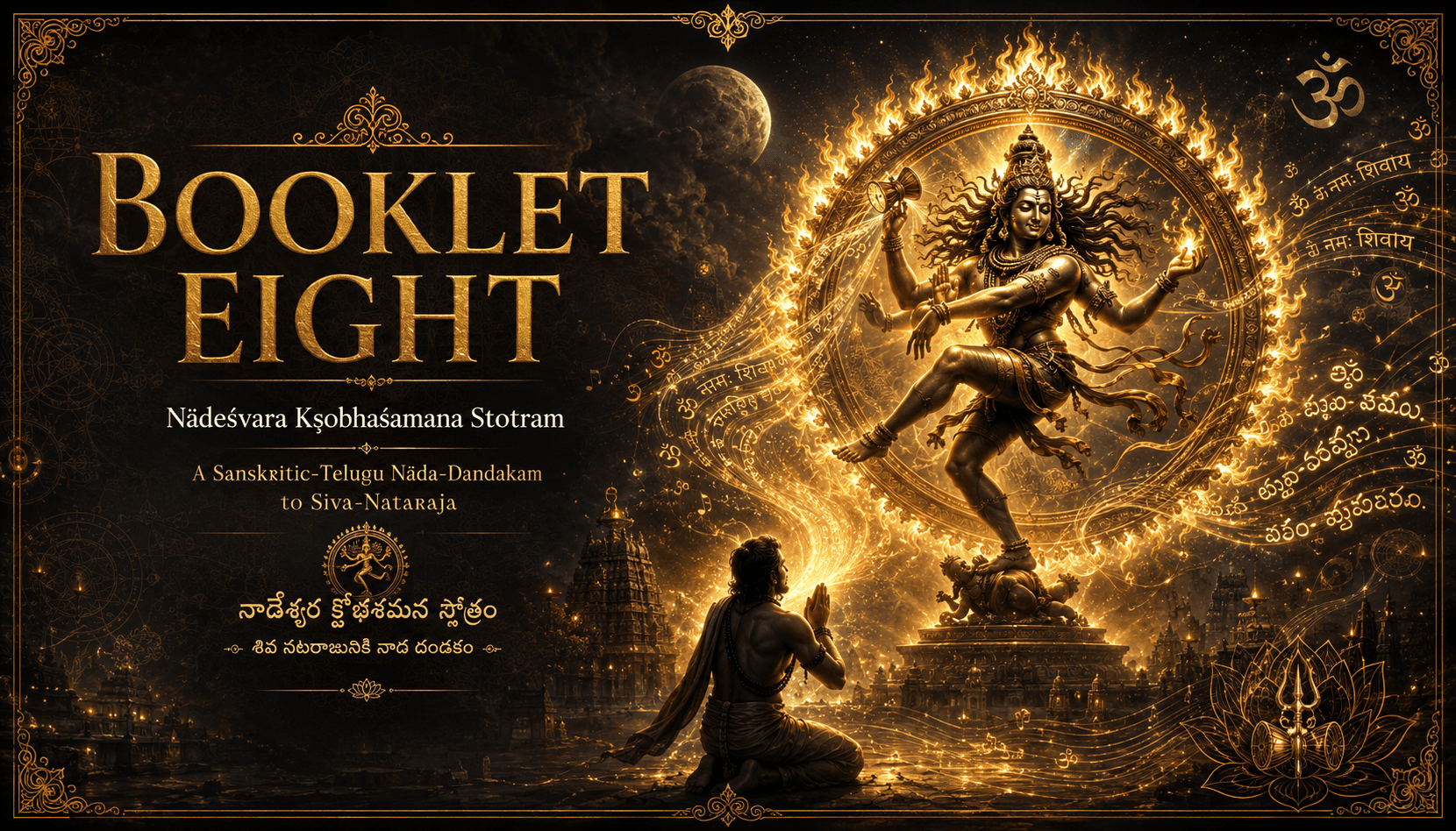
Cover image: AI-generated concept artwork based on the Booklet Eight theme - Nādeśvara's dance, damaru, sound-wave, grief, and rhythmalignment.
Sasidhar Valluru
Author’s Note
This eighth booklet is my own nāda offering at the feet of Nādeśvara. It is not presented as a formal Sanskrit stotra pretending to pass a grammar examination. It is a Sanskritic-Telugu nāda-dandakam: sound first, meaning inside sound, bhāva carried through percussion. Booklet Seven stood in the battlefield: vow, bow, chariot, arrow-fence, Mādhava,protectedgrief,andthekineticforceofdharmaunder pressure. This booklet completes that smaller arc by turning from battlefield movement into direct invocation. The author no longer only stands outside the circle of arrows. He asks the Lord to dance. He asks the damaru to reset the inner pulse. He asks that his disturbed rhythm may be aligned with the cosmic rhythm of Siva’s Tāṇḍava. The aim is Siva Tāṇḍava energy: matted locks, damaru, ash, serpent, fire, dance, Rudra, grace, and inner liberation. The speaker is restless. The mind is moving out of rhythm. So the prayer is not merely: ‘Save me.’ It is:
Dance, Siva. Let Your damaru reset my rhythm. Let my broken pulse synchronize with Your cosmic movement. Let grief turn toward grace.
The poem begins with Rudra’s form and ends with the jīva turning Siva-facing through grief.
Opening
WHEN GRIEF BECOMES RHYTHM
Grief first burns. Then it argues. Then it seeks meaning. Then, if carried long enough to Bhagavān, it changes texture. It stops being only a wound and becomes rhythm waiting to be corrected. Booklet Seven, Beyond Grief, remained close to the battlefield. Its images were kinetic: arrows, vows, chariots, horses, dusk, protected grief, Krishna’s hidden tenderness, and the warrior still holding the outer line. That booklet did not end in collapse. It ended with the seeker no longer owned by grief. Butbeyondgriefdoesnotmeanbeyondmovement.Theinner instrument can still tremble. The pulse can still be uneven. The mind can still be full of kṣobha - agitation, disturbance, turbulence, the vibration of pain before it has found proper tāla. That is where Nādeśvara enters. Not merely Siva as an icon. Not merely Nataraja as a bronze form. Nādeśvara is the Lord of sound, pulse, damaru, resonance, and sacred rhythm. He does not merely silence the seeker. He retunes him. Kṣobhaśamana, then, is not emotional deadening. It is not becoming numb.Itisthecalmingofturbulencebyalignment.Thebroken rhythm does not vanish into blankness. It is brought into the Lord’s rhythm. This stotram is therefore a prayer of rhythm-alignment. The seeker asks: Dance, Lord. Let Your damaru enter this disturbed inner field. Let the movement that creates, sustains, and dissolves the cosmos also correct the beat within me. Let grief become nāda. Let nāda become grace.
HOW TO READ THIS STOTRAM
The left column gives the Telugu original. The right column gives the Devanagari transcription. The Devanagari is not a Hindi translation; it is a sound-transcription for readers who can read Devanagari but not Telugu. The stanzas are numbered so readers can refer to them easily. The phalaśruti is treated as the closing fruit of the stotram. Read aloud where possible. Pronunciation matters, but bhāva matters more.Thisisa Sanskritic-Telugucomposition;somewordscarry Sanskritic density, while others retain the living texture of Telugu devotional speech. Theexplanatorysectionissingle-column.Eachwordisshownas Teluguwith Devanagariinparentheses,followedbythe English meaning. This allows both Telugu and Devanagari readers to follow the same explanation.
The Stotram Text
Telugu original with Devanagari transcription. TELUGU ORIGINALDEVANAGARI TRANSCRIPTION
1.
జటాధరా నిజా పహా నిరా మయా విలోహితా ।जटाधरा əनिजापहा əनिरामया əविलोəहता । జటాఘటానటాననా భవేశ శూలపాణయే ॥जटाघटानिटानिनिा भविेश शूलपाणये ॥ डमड्डमद्ध्विəनिप्रभो दयांबुधे ɘदगंबरा । డమడ్డమద్ధ్వనిప్రభో దయాంబుధే ది గంబరా । చల´చ్చితంబు నాదితో సముద్ధరస్వ మా ంశివాचलɠāचतंबु निाɘदतो समुद्धरस्वि मांɛशविा ॥ ॥
2.
భుజంగభూషణోద్ధత ప్రబోధకాలకాలకా ।भुजंगभूषणोद्धत प्र बोधकालकालका ।प्र लंबकंठकंधरा प्र पंचभस्मलेपका ॥ ప్రలంబకంఠకంధరా ప్రపంచభస్మలేపకా ॥నినా దడంబరాంబుధౌ ని మగ్నచేతసో మమ ।əनिनिादडंबरांबुधौ əनिमग्निचेतसो मम ।प्र ప్రబుద్ధతాండవేన త్వముద్యమస్వ శంకరా ॥बुद्धतांडविेनि त् विमुद्यमस्वि शंकरा ॥
3.
కపాలమాలికాధర ప్రహాసధూతభీతికా ।कपालमाɛलकाधर प्र हासधूतभीɚतका ।प्र ప్రభంజనప్రవాహిత ప్రణవసారవిగ్రహా ॥దిभंजनिप्रविाəहत प्र णविसारəविग्रहा ॥ ɘदगंतदग्धलोचनि प्र दीप्तविɚह्निलोलका ।दु గంతదగ్ధలోచన ప్రదీప్తవహి్నలోలకా । దురాశబంధమున్ మమ ప్రచూర్ణయాశుపాराशबंधमुनि् मम प्र चूणर्णयाशु पाशुपा ॥ శుపా ॥
The free reading ends here
11 more chapters to read
One email. The rest opens here, and you'll hear when the next booklet is ready.