

The Series / Booklet Nine
Booklet Nine
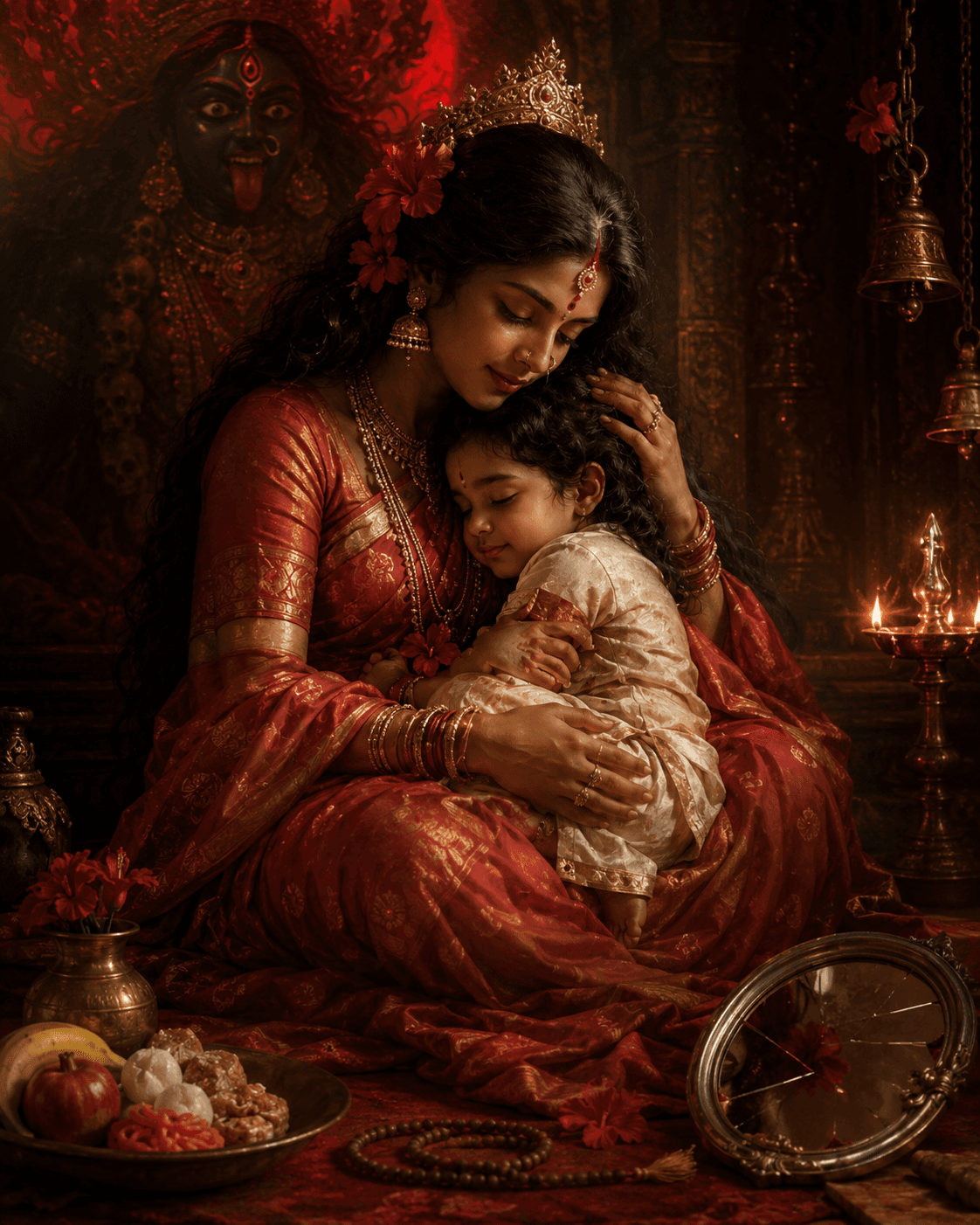
In Amma's Lap
Bhakti, Self-Laughter, Māyā, and the Child's Surrender
An illustrated poetry booklet in Telugu, Roman Telugu, and English.
This booklet is softer, not weaker. Through Telugu padyam, childlike complaint, divine motherhood, self-laughter, service, silence, vairāgya, and surrender, the seeker stops arguing with māyā and returns to Amma’s lap with one prayer: do not leave me outside.
Booklet Nine
Opens as a book: turn the pages, set the type and paper, and pick up where you stopped.
In Amma's Lap
T H E I N WA R D F I R E S E R I E S
Booklet Nine IN AMMA'S LAP Bhakti, Self-Laughter, Māyā, and the Child's Surrender A reading through Telugu padyam, childlike complaint, divine motherhood, service, silence, vairāgya, and surrender. Sasidhar Valluru
Cover artwork: Divine Mother with child-devotee, original generated devotional artwork. Interior illustrations: original generated devotional artwork forThe Inward Fire Series.
The Inward Fire Series | Booklet Nine
Author's Note This booklet is softer than some of the earlier doors inThe Inward Fire Series. Not weaker. Softer. Here the seeker is no longer trying to defeat māyā through argument. He is laughing at himself. He is complaining to Amma. He is teasing Krishna. He is frightened of being handed back to Māyā like a child sent away from the mother's lap. He is asking Kāli not for philosophy, but for the right to remain held. He is asking Paraśurāma and Vyāsa for family stories. He is asking that service become Father's service. He is asking that noise be silenced. He is asking that the costumes of vairāgya, ego, role, and identity break apart. Some poems are simple. Some are playful. Some are deliberately childlike. Some turn fierce. Some are technically metered. Some lean into Sanskritic thunder. All of them move toward one thing: Do not leave me outside. Take me in. Hold me.
The Inward Fire Series | Booklet Nine
1.1. The Mirror of Māyā—మాయాఅద్దం 2.2. The Māyā of Offering—నైవేద్య మా య 3.3. Kannikattu—కÂన్నికట?్టు 4.4. Invocation of Kālikā—కాళికాఆవాహన 5.5. In Kālikāmbā’s Lap—కాళికాంబా ఒడిలో 6.6. Only in the Lap—ఒడిలోనే 7.7. Brother Bhārgava Rāma—మన్ని భా ర్గవరామారా 8.8. Tell Me, Brother Vyāsa—వా్యసన్ని చె ప్పవే 9.9. Stories in Amma’s Lap—అƃమ్మొడిలో కథల? 10.10. Service-Play—సేవాటల? 11.11. Silence the Noise—Silence the Noise 12.12. The Costume of Vairāgya—వైరాగ్యవేషం 13.13. Mango-Shoot Colors—ం చి గ?ర?ల?మావి 14.14. Lord of Kirīti—కిరీటిం పతే 15.15. Where Your Beings Gather—భూతాస మా గంహరే
The Inward Fire Series | Booklet Nine
Chapter 1
The Mirror of Māyā మాయా అద్దం
Meter:కంద పద్యం/ Kanda Padyamమాయా అద్దములోనన్māyā addamulōnanమేనిమిది నాది యనుకొంటిని ।mēnimidi nādi yanukoṇṭini.నీవు చూపిన చీలికలోnīvu cūpina cīlikalōనిజమరసి నవ్వితిని తండ్రీ ॥nijamarasi navvitini taṇḍrī.
భావము
దేహం, రూపం, పాత్ర, గర్వం — ఇవన్నీ అద్దంలో కనిపించిన ప్రతిబింబాలే. భక్తుడు తనను తాను చూసి మోసపోయిన సంగతి గ్రహిస్తున్నాడు. అద్దం పగిలినప్పుడు నాశనం కాలేదు; అబద్ధం బయటపడింది.
Meaning
The devotee sees how the body, image, role, and pride had become a mirror-trick. When the mirror cracks, nothing real is lost. The false center is exposed, and the laughter is tender because the seeker is laughing at himself. A U T H O R ' SC O N T E X T This opening poem makes the booklet intimate. It does not attack the body. It attacks misidentification. Māyā first enters through the most ordinary place: “this is me.”
The Inward Fire Series | Booklet Nine · 1
Chapter 2
The Māyā of Offering నైవేద్య మాయ
Meter:కంద పద్యం/ Kanda Padyamనైవేద్యమని పెట్టిnaivēdyamani peṭṭiనాలుకకై దాచుకొంటిని తల్లీ ।nālukakai dācukoṇṭini tallī.నీదని తెలిసిన తరువాతnīdani telisina taruvātaనాకేమి మిగిలెనమ్మా? ॥nākēmi migilenammā?
భావము
భక్తుడు నైవేద్యం కూడా తన భక్తి కోసం మలిచిన చిన్న మాయను నవ్వుకుంటున్నాడు. దేవునికిచ్చినట్టు చేసి, లోపల తన కోరికను దాచుకున్నాడు. చివరికి అన్నీ అమ్మవారిదే అని గ్రహిస్తున్నాడు.
Meaning
The offering becomes another small costume of desire. The devotee pretends to offer, but the tongue waits behind the curtain. Once he sees that even the offering and the hunger belong to Her, the joke collapses into surrender. A U T H O R ' SC O N T E X T This is the self-derisive Pōthana-like doorway of the booklet: devotional laughter that does not excuse the ego, but does not hate it either.
The Inward Fire Series | Booklet Nine · 2
Chapter 3
Kannikattu కన్నికట్టు
Meter:కంద పద్యమాలిక ధోరణికళ్లుకట్టో కన్నికట్టోkaḷḷukaṭṭō kannikaṭṭōకట్టితివి నన్ను కారుణ్యమూర్తే ।kaṭṭitivi nannu kāruṇyamūrtē.జపమాల గిర్రున తిరిగె;japamāla girruna tirige;భజనలు బిర్రాయె — గుణం సోకలే ॥bhajanalu birrāye - guṇaṃ sōkalē.తంతులు చేసితి; తంత్రంtantulu cēsiti; tantraṃనేర్చితి — తాయెత్తులెల్ల తెగిపోయె ।nērciti - tāyettulella tegipōye.గంటలు మ్రోగె; గంధంgaṇṭalu mrōge; gandhaṃఅరిగె; గోడు తీరలే గోపాలా ॥arige; gōḍu tīralē gōpālā.కర్మంబేదో కానన్;karmambēdō kānan;ఖర్మశేషము తెలియదు కన్నా ।kharmaśēṣamu teliyadu kannā.కనిపించి కాపాడుటkanipinci kāpāḍuṭaనీకు అంత కష్టమా తండ్రీ? ॥nīku anta kaṣṭamā taṇḍrī?నీదు కొడుకుతో కయ్యంnīdu koḍukutō kayyaṃఇంక చాలదా? దయ కొంచెము రాదా? ।inka cāladā? daya koñcemu rādā?కుచేలునితో నీ కరుణkucēlunitō nī karuṇaఖర్చాయెనా కృష్ణా? శరణు సారథీ! ॥kharcāyenā kṛṣṇā? śaraṇu sārathī!
Chapter 3
Notes
భావము
కన్నికట్టు అంటే ఇక్కడ భక్తుని మీద కృష్ణుని మాయా-కరుణ. బయట జపమాల తిరిగింది, భజనలు పెరిగాయి, తంత్రం, తాయెత్తులు, గంటలు, గంధం అన్నీ జరిగాయి. కానీ గుణం అంతరంగంలో తగల్లేదు. చివరికి భక్తుడు సరదాగా అడుగుతున్నాడు: కుచేలునితో నీ కరుణ అంతా ఖర్చైపోయిందా?
Meaning
The devotee says Krishna has bound him. Outward devotion increased: rosary, bhajans, rituals, tantra, amulets, bells, sandal. But the inner essence did not yet touch. The complaint becomes surrender to the Charioteer.
Author's Context
This poem keeps the playful nerve alive: the devotee teases Krishna but does not leave Him.
The Inward Fire Series | Booklet Nine · 3 · Notes॥THE CHILD REMAINS HELD
The free reading ends here
12 more chapters to read
One email. The rest opens here, and you'll hear when the next booklet is ready.