The Series / Booklet Seventeen
Booklet Seventeen
When the Costume Becomes Skin
Role, Māyā, the Forgotten Performer, and the Way Back Inward
A mother must mother, a leader must lead, a teacher must teach, and a warrior must fight. Roles are instruments of dharma, not the enemy. This booklet asks how role becomes identity, how life tears the script, and how the seeker remembers the forgotten discipline of return.
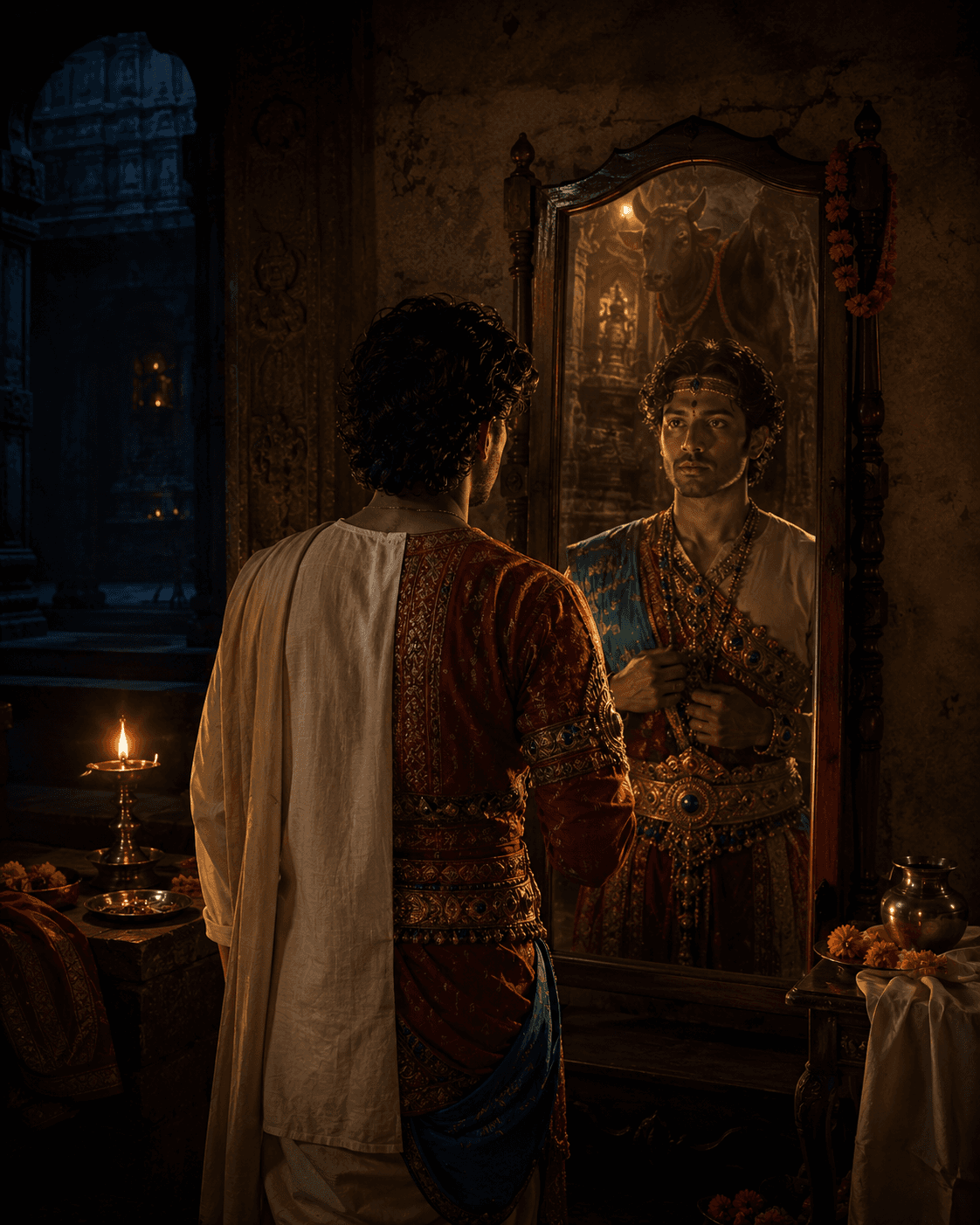
Booklet Seventeen
Opens as a book: turn the pages, set the type and paper, and pick up where you stopped.
When the Costume Becomes Skin
Role, Māyā, the Forgotten Performer, and the Way Back Inward
MOVEMENT SIX · THE HUMAN FIELD AROUND THE SEEKER Sasidhar Valluru THE INWARD FIRE SERIES
WHEN THE COSTUME BECOMES SKINRole, Māyā, the Forgotten Performer, and the Way Back InwardSasidhar Valluru BOOKLET SEVENTEENMovement SixThe Human Field Around the SeekerWritten by Sasidhar Valluru The Inward Fire Series First edition
This work is presented as a contemplative literary booklet.
Author's Note
This booklet belongs to Movement Six: The Human Field Around the Seeker. The earlier booklets in this movement looked at the human field from different doors. When the mind could not bear complexity, it demanded a verdict. When compassion over-carried, it needed a boundary. When the helper was mistaken for the Source, the instrument had to remember its limit. This seventeenth booklet steps back and asks what makes all these confusions possible. The answer is role. Not role as a mistake. Role is necessary. The world cannot run without it. A mother must mother. A father must father. A leader must lead. A teacher must teach. A warrior must fight. A friend must stand beside. A bystander must decide whether he is merely watching or being summoned into action. Roles are not the problem. Misidentification is the problem. The role becomes the skin. The costume stops feeling like costume. The actor forgets he is acting. The performer forgets the one who is watching. And slowly life becomes one long movie set where no one remembers that the camera is on, the lights are temporary, the costume is stitched, and the scene will end. This booklet is about that forgetting. And more importantly, it is about return.
We do not fail because we act. We fail because we do not know how to return.
Opening: The Role Became the Skin8
1. ROLES ARE NOT THE ENEMY10 2. THE DISCIPLINE WE FORGOT: RETURN12 3. WHEN LIFE TEARS THE SCRIPT14 4. TRUTH AFTER THE SCRIPT TEARS16 5. THE ANSWER FROM THE COSTUME18 6. MĀYĀ BEGINS BEFORE THE BIRTH CRY20 7. LIFE ACTS THROUGH EVERYTHING22 8. THE BULL UNDER THE ROPE25 9. WRONG ID27 10. THE VANITY VAN29 11. SIGNAL, NOT NOISE32 12. OBSERVED, OBSERVED, OBSERVED34 13. THE GIST37
Epilogue: Return Without Forgetting39 OPENING
The Role Became the Skin
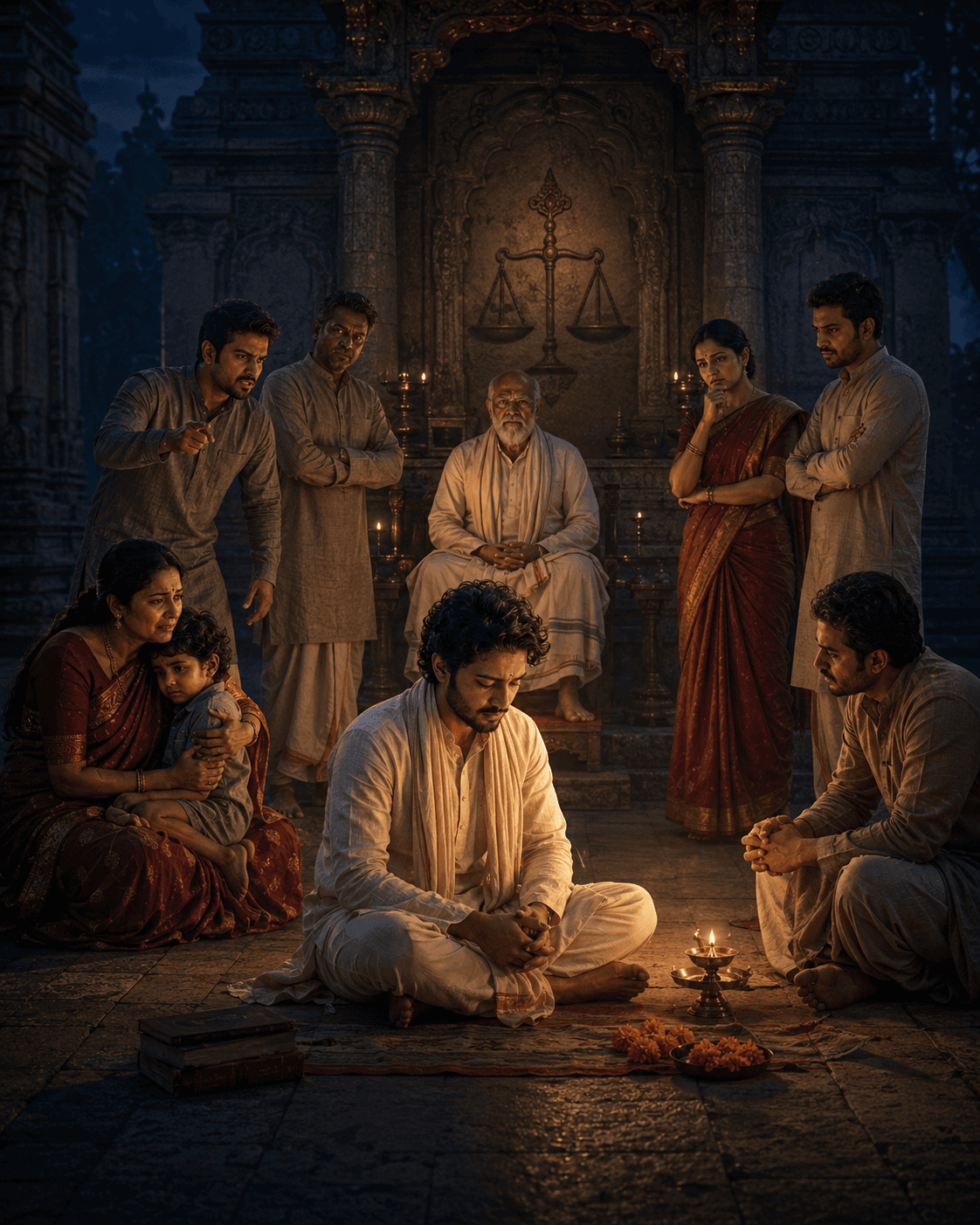
We live in roles. Father. Mother. Son. Daughter. Husband. Wife. Boss. Employee. Brother. Sister. Friend. Enemy. Neighbor. Passer-by. Bystander. Fixer. One who needed fixing. One who came up to the gate and realized there was nothing left to fix. The list is endless. And because the list is endless, listing it is pointless. The important thing is not how many roles we play. The important thing is how completely we forget that we are playing them. That is where bondage begins. Not in the role itself. The role is necessary. The world cannot run without roles. A mother must mother. A father must father. A leader must lead. A teacher must teach. A warrior must fight. A judge must judge. A friend must stand beside. A bystander must decide whether he is merely watching or being summoned into action. The trouble begins when the role becomes the skin. A costume can be removed. Skin cannot be removed without pain. So when the role becomes skin, any challenge to the role feels like injury. Any correction feels like attack. Any change in the scene feels like death. A person becomes mother and forgets the human being underneath. A person becomes father and forgets the frightened child still alive inside him. A person becomes boss and forgets that authority is only a costume stitched by payroll, hierarchy, and circumstance. A person becomes victim and forgets that wound is not the whole Self. A person becomes seeker and forgets that even spirituality can become makeup. The role becomes the skin. Then life tears the script.
│The role is not the enemy. Possession by the role is the
bondage.
Chapter 1
ROLES ARE NOT THE ENEMY
It is tempting to hear this and imagine that the answer is to reject roles. That would be childish. Dharma does not ask us to abandon roles. It asks us not to be possessed by them. A mother who refuses to mother because motherhood is a role has not become free. A father who withdraws from responsibility because fatherhood is not the Self has not understood the Self. A leader who refuses decisions because hierarchy is only costume is not liberated; he is useless. A warrior who will not fight because the world is māyā has not transcended māyā; he has misunderstood both battle and surrender. Roles are instruments of dharma. The problem is not acting. The problem is forgetting. The mother must mother, but she must not become trapped in the idea that motherhood makes her invincible. The father must father, but he must not perform strength so completely that truth cannot breathe. The leader must lead, but he must not confuse position with inner size. The seeker must seek, but he must not turn seeking into another costume stitched from vocabulary, posture, and subtle pride.
A role is clean when it is held as responsibility. A role becomes bondage when it becomes identity.
Chapter 2
THE DISCIPLINE WE FORGOT: RETURN
We understand this perfectly in cinema. If an actor weeps with his co-star on screen, he does not take her home as his wife. If he fights a sworn enemy on screen, he does not continue the bloodletting after the director says cut. If he plays a king, he does not expect the crew to kneel at dinner. If he plays a beggar, he does not forget his own house. A good actor enters the role fully. But he returns. That return is the missing discipline of life. We do not fail because we act. We fail because we do not know how to return. To return does not mean to become detached in a dry and useless way. It does not mean to act without love. It does not mean to speak from a height where no human smell reaches. It means the performer remembers that the role is being worn. The actor can weep more truly when he is not drowning in the false belief that the scene is the whole of existence. The leader can decide more cleanly when he remembers that authority is temporary. The parent can love more honestly when love is not mixed with the fear of losing god-status before the child. Return is not escape from the scene. Return is what allows the next scene to be entered cleanly.
A good actor enters fully. But he returns.
Chapter 3
WHEN LIFE TEARS THE SCRIPT
The role feels manageable when the script is working. The child behaves. The illness responds. The company behaves. The marriage heals. The grief softens. The prayer produces the expected result. The familiar god appears familiar. Then life does what life does. It tears the script. The child reacts differently. The illness does not respond. The company refuses to behave. The marriage does not heal. The grief does not leave. The prayer does not produce the expected result. The familiar god seems silent. Suddenly the practiced acting fails. The mother does not know what to say. The father does not know what to fix. The boss cannot rescue the situation. The friend cannot reach the friend. The seeker cannot make the silence speak. The bystander cannot pretend he is only watching. This is the mercy hidden inside crisis. Crisis exposes the role. Not to humiliate it. To reveal it. When the script is torn, the performer can finally be seen behind the costume.
│Life tears the script not only to wound us, but to show us
what was only costume.
The free reading ends here
10 more chapters to read
One email. The rest opens here, and you'll hear when the next booklet is ready.